The word “healthy” is everywhere nowadays. Product packaging, fitness marketing, and foods promoted as “clean eating” options are constantly filling supermarket shelves and social media feeds.
However, just because a food is considered healthy does not necessarily mean it can be consumed without limits or that it is always the best choice. In many cases, products that appear harmless may contain high amounts of sugar, salt, fats, or calories that are easy to overlook.
This does not mean we should completely exclude them from our diet. It simply means we should understand what they actually contain in order to make more conscious choices.
Granola
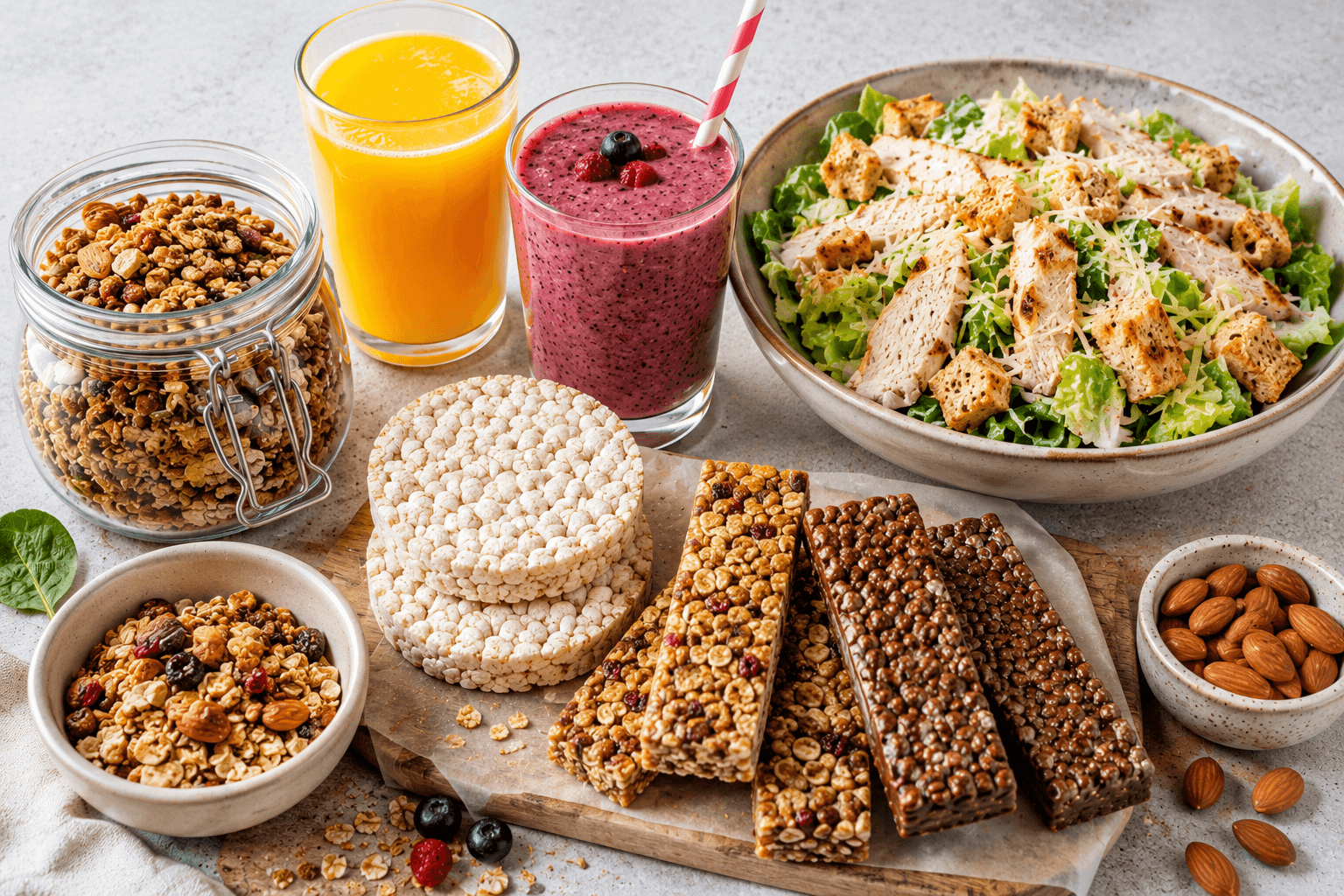
Granola is strongly associated with a healthy lifestyle and is often seen as an ideal breakfast option. However, many commercial products contain significant amounts of added sugar, syrups, and fats to improve taste and texture.
A small portion can easily contain far more calories than expected.
Fruit Juices
Many people believe that a natural fruit juice is equivalent to eating whole fruit. While it does contain vitamins and antioxidants, juice lacks most of the fiber found in whole fruit.
It is also very easy to consume large amounts of sugar without feeling full.
Cereal Bars
Cereal bars are often chosen as a quick and healthy snack. However, many of them contain sugar levels similar to those found in sweets.
Reading the nutrition label often reveals major differences between products.
Store-Bought Smoothies
Smoothies can be a nutritious choice when properly prepared. However, many ready-made versions contain concentrated juices, added sugars, or very large fruit portions that significantly increase calorie intake.
In some cases, a smoothie can have the calories of a full meal.
Flavored Yogurts
Yogurt is an excellent source of protein and calcium. However, many flavored or dessert-style yogurts contain high amounts of added sugar.
The difference between plain Greek yogurt and flavored yogurt can be surprisingly large.
Dried Fruits
Dried fruits contain vitamins, minerals, and fiber. However, removing water concentrates both nutrients and natural sugars.
This makes it very easy to overconsume them without realizing it.
Rice Cakes
Rice cakes are often considered a “diet food.” While they are low in calories per piece, they provide very little satiety, which often leads to eating more than intended.
When combined with spreads like peanut butter or sweet toppings, calories increase quickly.
Peanut Butter
Peanut butter contains healthy fats, protein, and important nutrients. However, it is also very calorie-dense.
One or two tablespoons can fit well in a balanced diet, but larger portions can significantly increase calorie intake without being noticed.
Restaurant Salads
The word “salad” does not always mean low-calorie. Many restaurant salads contain high-calorie dressings, cheese, bacon, croutons, or fried ingredients.
In some cases, a salad can have more calories than a main dish.
Vegan Snacks and Desserts
The vegan label refers to the absence of animal products, not necessarily to nutritional quality. A vegan cookie or cake can contain just as much sugar and fat as its non-vegan counterpart.
Plant-based does not automatically mean healthy.
How to Evaluate Foods Properly
Instead of relying only on marketing claims, it is important to look at the overall nutritional value of a product. Calories, sugar content, fiber, protein, and ingredients all provide a clearer picture.
No food is strictly “good” or “bad.” What matters most is portion size, frequency, and overall dietary pattern.
My Opinion
In practice, many people believe they are eating “healthy” but still struggle with weight management or health goals. Often, the issue is not their effort but misconceptions about certain foods.
I believe education is far more powerful than restriction. There is no need to fear granola, peanut butter, or dried fruits. However, it is important to understand what they truly provide and include them in moderation as part of a balanced diet.