Heatwaves test the body’s endurance, as high temperatures increase sweating and fluid lossHeatwavesHeatwaves can be particularly demanding on your body. High temperatures increase sweating and, consequently, the loss of fluids and electrolytes.
Therefore, proper hydration is essential. At the same time, however, your diet also plays an important role. The right foods for heatwaves can provide you with water, vitamins, minerals and energy.
So what is worth putting on your plate when the temperature rises?
Fruits with a high water content
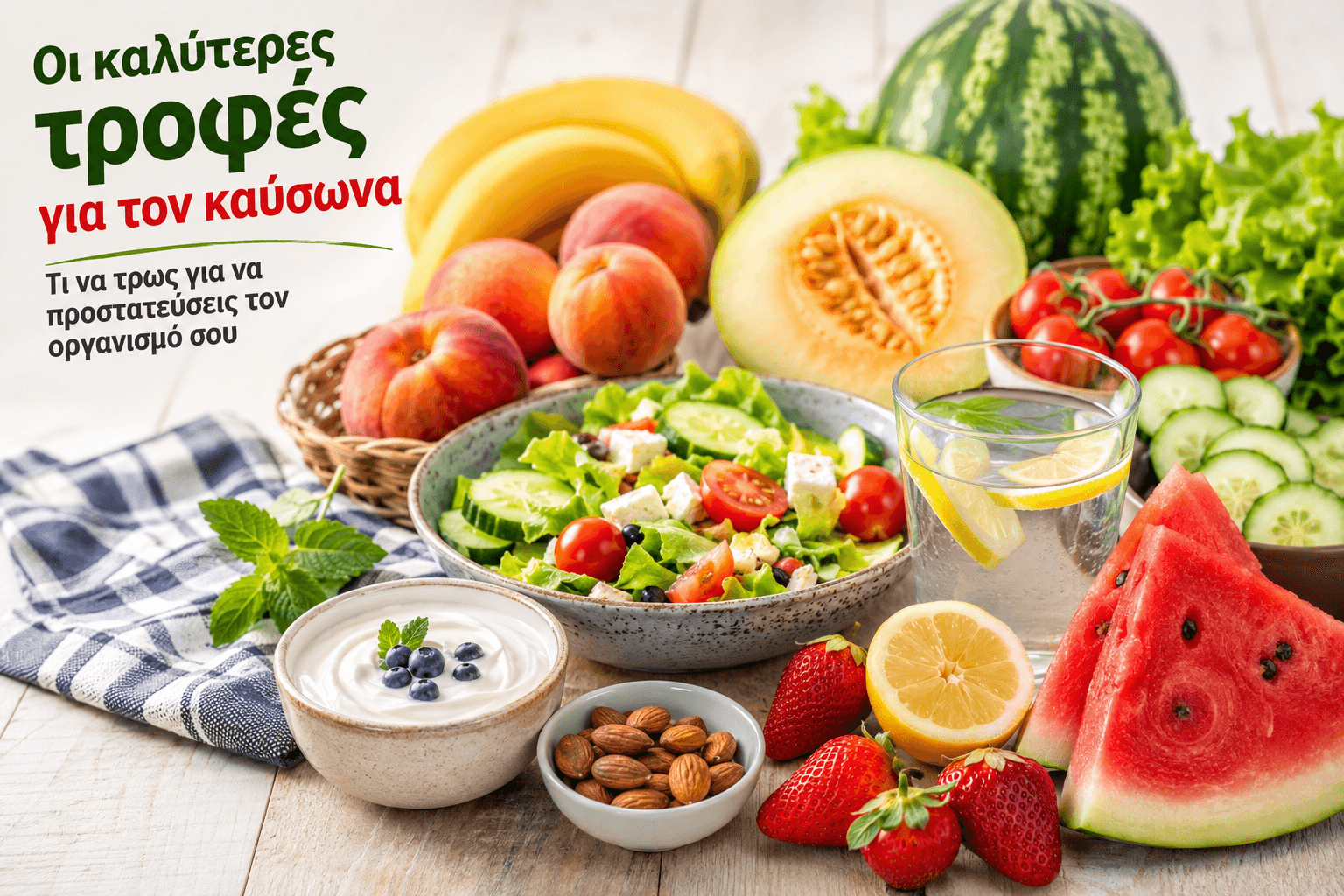
Summer fruits are among the best foods for heatwaves. Many of them contain a large amount of water and, at the same time, offer vitamins and minerals.
Watermelon and cantaloupe are typical choices. Strawberries, peaches and grapes belong to the same category.
A bowl of fresh fruit can be the ideal cool snack. Alternatively, combine them with yogurt or add them to a fruit salad.
Cool vegetables for better hydration
Vegetables also have an important place in the summer diet. Cucumber, tomato, lettuce and peppers contain a lot of water and offer valuable nutrients.
A large, cool salad is an excellent choice for hot days. For a more complete meal, add a source of protein, such as egg, cheese, chicken, tuna or legumes.
This way, you will have a light but satisfying meal that will not weigh you down.
Yogurt: a cool and nutritious option
Yogurt is ideal when the heat reduces your appetite for food. It is easy to consume and can be a quick breakfast, snack or light meal.
At the same time, it offers you protein and calcium. For more flavor and nutritional value, combine it with fresh fruit and a few nuts.
This way, you create a meal that contains protein, good fats, and fiber.
Foods that provide electrolytes
Heavy sweating can lead to fluid and electrolyte loss. Therefore, a balanced diet with a variety of foods is particularly important.
Some options that you can include in your diet are:
banana
avocado
yogurt
nuts
legumes
green leafy vegetables
These specific foods provide important minerals, such as potassium and magnesium. However, you don’t need to look for special “superfoods.” Variety and balance in your diet are what matters most.
Opt for light meals in the heat
A large and very fatty meal can cause a feeling of heaviness and discomfort. Especially on days with very high temperatures, lighter meals are usually better tolerated.
In your daily menu you can choose:
grilled fish with salad
chicken with vegetables
cool salad with egg or cheese
pasta with vegetables
legumes in the form of a salad
yogurt with fruit and nuts
Smaller meals throughout the day can also help you feel more comfortable.
Water: your most important ally
As important as foods are for the heat wave, nothing can replace water.
On days with high temperatures, you need to drink water regularly. Don’t wait until you feel very thirsty to hydrate.
In addition, cool drinks without a lot of sugar can contribute to fluid intake. The same applies to foods with a high water content, such as fruits and vegetables.
If you exercise or sweat a lot, your fluid and electrolyte needs may be increased.
What to limit when it’s hot
Diet in hot weather doesn’t have to be complicated. However, some choices are better consumed in moderation.
By limiting very fatty and heavy meals, you are likely to feel less weight and discomfort. At the same time, it is good not to overdo it with very salty and highly processed foods.
Caution is also needed with alcohol consumption. Excessive consumption is not a good choice when your body needs adequate hydration.
A simple summer diet plan
A hot day can start with a cool yogurt, fruit and a few nuts.
For your lunch, a large salad with chicken, egg, cheese or legumes is an easy and nutritious choice.
A piece of fruit or a cold yogurt can satisfy your need for a snack in between. In the evening, a light meal, such as fish with salad or an omelet with vegetables, is a good choice.
Of course, the needs of each organism are different. Therefore, the quantity and composition of your meals should be adapted to your own needs and lifestyle.
My opinion
In my opinion, on hot days you don’t need to look for some “magic” food that will protect your body from the heat. What really matters is the overall picture of the
your doctor.
Fresh fruits and vegetables, light meals, and adequate water consumption can help you feel better when the temperature rises. At the same time, protection from heat is not only about what you eat. Avoiding intense sun exposure and staying in cool areas, especially during the hottest hours of the day, are equally important.
With simple daily choices, you can help your body respond better to high temperatures and enjoy the summer with more energy and well-being.