
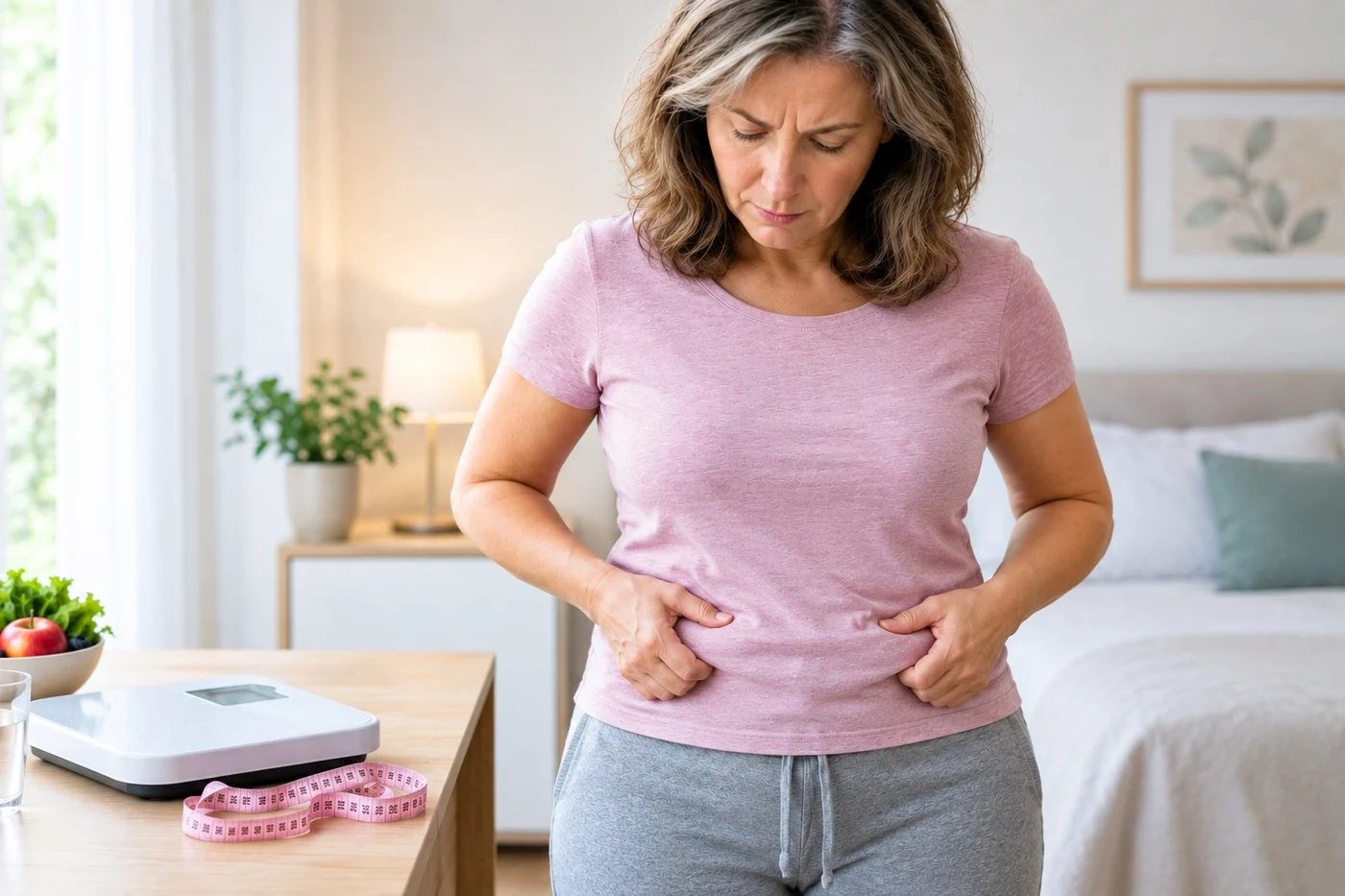
Weight gain in midlife is a very common concern for women and often becomes more noticeable during perimenopause and menopause. Although it is easy to attribute every change to hormones, the reality is more complex. Menopause occurs during an age period when muscle mass, daily activity, sleep, diet and the way body fat is distributed are also changing.
What changes is not only the number on the scale. In many women, total body fat increases, particularly abdominal and visceral fat, while lean mass, especially muscle mass, decreases. These changes can occur even when the overall increase in body weight is modest. For this reason, management should not rely only on a strict weight-loss diet, but on a broader approach that protects muscle mass and metabolic health.
Does menopause itself cause weight gain?
Not exactly. Research shows that body weight tends to increase with age regardless of whether a woman is menopausal. However, the menopausal transition is associated with a distinct change in body composition and fat distribution: more fat around the abdomen and less lean mass. In other words, menopause is not the only cause of weight gain, but it can substantially change where fat is stored and how the body changes.
Longitudinal studies suggest that average weight gain during the menopausal transition is usually modest, with considerable variation between women. This means that gaining a large amount of weight is not inevitable simply because menopause begins. Age, diet, physical activity, muscle mass, genetics, sleep and other factors also play important roles.
What happens to hormones and fat distribution?
During perimenopause and after menopause, ovarian estrogen production declines substantially. This hormonal change is associated with changes in fat distribution, with a tendency toward greater abdominal fat accumulation and relatively less fat stored around the hips and thighs.
This matters more than the scale alone suggests because visceral fat, the fat surrounding internal organs, is more strongly associated with metabolic disturbances and cardiometabolic risk. This is why a woman may feel that she has “gained around the waist” even when her total weight has changed only slightly.
At the same time, the decline in estrogen should not be treated as a single mechanism that explains everything. The exact relationship between hormonal changes, energy expenditure, appetite and metabolism is complex and continues to be studied.
Loss of muscle mass also matters
With aging, muscle mass and strength gradually decline, while daily energy expenditure may also decrease. The menopausal transition can add to these changes in body composition. When there is less muscle tissue and daily movement also decreases, total energy requirements may be lower than they were in the 30s or early 40s.
This does not mean that the metabolism is simply “broken.” It means that the body may require less energy than it did in earlier years, particularly when muscle mass and physical activity have declined. Preserving and strengthening muscle is therefore one of the most important goals during midlife.
Sleep and stress can make things harder
Hot flashes and night sweats, as well as mood changes and the increased stress that can accompany midlife, may disrupt sleep. Poor or fragmented sleep is not only a matter of feeling tired. It can affect appetite, food choices, energy for exercise and overall daily activity.
This can create a difficult cycle: less sleep, more fatigue, less movement and greater difficulty maintaining regular meals and exercise. This does not mean that every woman with poor sleep will gain weight, but sleep is an important factor to consider when body weight changes during menopause.
Why does fat move toward the abdomen?
Changes in fat distribution are among the most characteristic features of the menopausal transition. Lower estrogen levels appear to favor greater abdominal fat storage, while normal aging and changes in muscle mass can reinforce the overall pattern.
This helps explain why many women notice that their body shape changes even without a dramatic increase in body weight. Waist circumference can therefore provide useful information about changes in body composition, although it should not be used alone to assess health.
What can help manage weight during menopause?
The goal is not to “fight” menopause, but to adapt habits to the changing needs of the body. Nutrition can make an important contribution, especially when combined with exercise and adequate sleep.
A dietary pattern based on vegetables, fruit, legumes, whole grains, nuts, seeds, fish, olive oil and adequate protein can provide a strong foundation. Every meal does not have to be perfect. Overall dietary quality and consistency over time matter more.
Particular attention should be given to protein because preserving muscle becomes increasingly important. Good choices include fish, eggs, yogurt and other dairy foods, legumes, lean meat and combinations of plant protein sources. The appropriate amount and distribution of protein throughout the day should be tailored to each woman’s needs.
Resistance training is also particularly important. Exercises using weights, resistance bands or body weight can help preserve and build muscle mass and strength. Aerobic activity, such as brisk walking, cycling or swimming, complements this effort and supports cardiometabolic health.
Daily movement should not be overlooked either. More steps, regular breaks from prolonged sitting, taking the stairs and generally moving more throughout the day can make a meaningful contribution to energy expenditure.
Do you need a strict diet to lose weight?
Usually not. Very restrictive diets may produce rapid weight loss, but when they do not adequately support protein intake, exercise and overall nutrition, they may make it harder to preserve muscle mass. In midlife, the goal is not simply to make the number on the scale smaller, but to improve body composition and preserve physical function.
A gradual, individualized approach is usually more useful, with emphasis on food quality, appropriate portions, protein and fiber, regular exercise and consistency. For women with excess weight or metabolic risk factors, nutrition support may need a more specific plan developed with a registered dietitian or other qualified health professional.
What about menopausal hormone therapy?
Menopausal hormone therapy is not a weight-loss diet and should not be started solely for the purpose of losing weight. The decision to use hormone therapy depends on symptoms, individual medical history, benefits and potential risks and should be discussed with a physician.
Current evidence shows that hormonal status affects body composition and fat distribution, but weight management during menopause remains multifactorial. There is no single hormone or supplement that solves the problem on its own.
My opinion
If weight gain is sudden, substantial or accompanied by other symptoms, it is worth discussing it with a healthcare professional. Not every change in body weight should automatically be attributed to menopause. Thyroid function, medications, sleep, mental health, physical activity and other metabolic factors can also affect body weight.
Menopause is a normal life stage, not a period in which increased body fat is inevitable. Early attention to nutrition, muscle mass, movement and sleep can make an important difference in preventing and managing changes in body composition.
Scientific sources
International Menopause Society: Understanding weight gain at menopause
Weight, Shape, and Body Composition Changes at Menopause
Body composition and cardiometabolic health across the menopause transition