
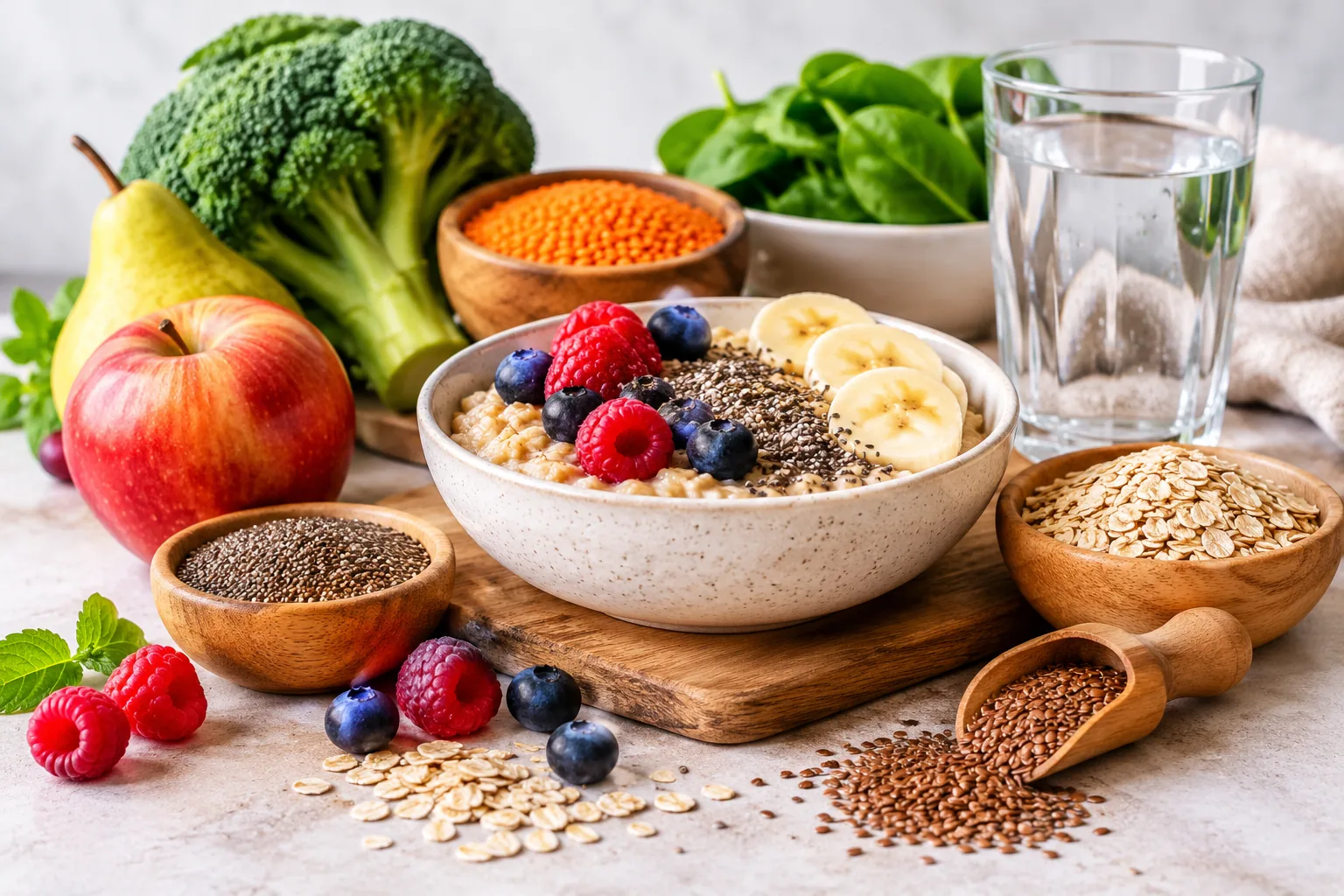
A new nutrition trend is gaining attention on social media, focusing on a nutrient we often overlook: dietary fiber. Fibermaxxing describes the effort to increase daily fiber intake through foods such as fruit, vegetables, legumes, oats and seeds.
Its popularity is linked to growing interest in gut health, the microbiome, satiety and weight management. Although the term is relatively new, the benefits of dietary fiber have been scientifically established for many years.
How Does Fiber Support Gut and Overall Health?
Dietary fiber consists of components in plant foods that are not fully digested in the small intestine. It is commonly divided into soluble and insoluble fiber, which have different but complementary effects. Soluble fiber, found in oats, legumes, apples and chia seeds, absorbs water and forms a gel-like substance. Some types help regulate cholesterol and post-meal blood glucose.
Insoluble fiber, found mainly in whole grains, vegetables and nuts, increases stool bulk and supports normal bowel function.
Fiber is also closely connected to the gut microbiome. Certain types act as food for beneficial gut bacteria. During fermentation, short-chain fatty acids such as butyrate are produced, helping maintain the health of the intestinal lining.
Can Fiber Reduce Hunger and Help with Weight Management?
One of the most important benefits of fiber is its contribution to satiety. Fiber-rich foods often add volume to meals, require more chewing and can prolong the feeling of fullness.
In addition, many fiber-rich foods, such as vegetables, fruit and legumes, have a relatively low energy density. They can therefore help with appetite management and overall energy intake.
This does not mean that fiber causes weight loss on its own. It is not a fat burner and cannot replace a balanced eating plan. However, it can be a valuable part of a weight-management strategy.
How Much Fiber Do We Need and Which Foods Should We Choose?
According to the World Health Organization and the European Food Safety Authority (EFSA), adults need at least 25 grams of dietary fiber per day to support normal bowel function.
Good everyday choices include:
- Legumes: lentils, chickpeas, beans and peas.
- Fruit: apples with their skin, pears, kiwis and berries.
- Vegetables: broccoli, carrots, artichokes and leafy green vegetables.
- Whole grains: oats, whole-grain bread and brown rice.
- Nuts and seeds: almonds, walnuts, chia seeds and flaxseed.
To increase fiber intake, we can add fruit to breakfast, choose whole-grain products and include legumes regularly in our weekly meal plan.
What Should We Watch Out for When Increasing Fiber?
More fiber does not necessarily mean better results. Increasing intake too quickly can cause bloating, gas and abdominal discomfort, especially in people who are not used to eating fiber-rich foods.
For this reason, intake should be increased gradually, alongside adequate water consumption. People with irritable bowel syndrome or other gastrointestinal conditions may need individualized food choices.
Fiber supplements, such as psyllium, can be useful in certain situations, but they do not replace whole foods, which also provide vitamins, minerals and antioxidant compounds.
My Opinion
I believe it is positive that Fibermaxxing is bringing attention back to the importance of dietary fiber. It is a component often missing from modern diets, despite playing an important role in gut and overall metabolic health.
However, eating should not become a competition to see who can consume the most fiber. What really matters is consistency, variety and balance.
My advice is simple: eat more legumes, fruit, vegetables and whole grains, making gradual changes that can be maintained over the long term. This is the essence of an eating pattern that genuinely supports our health.